Picture this: it’s a Tuesday afternoon, one kid needs a cleaning, another just chipped a tooth on the playground, and your own dentist has been sending “you’re overdue” reminders for months. You want everyone to have healthy teeth. You also want to pay the electric bill. For a lot of families, those two goals feel like they’re fighting each other.
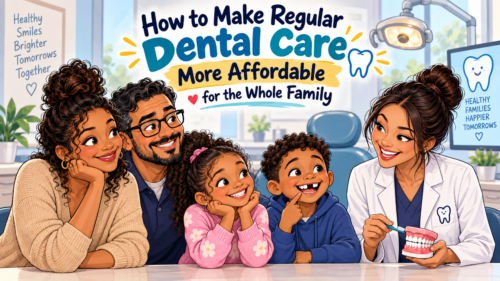
The truth is, dental care doesn’t have to be the expense you dread. With a little planning and a few smart choices, you can keep the whole family’s smiles in good shape without wincing every time you open the bill. Here’s how to make it work.
Start With Prevention, Because It’s the Cheapest Option
The most affordable dental visit is the one you don’t need. Cavities, gum disease, and cracked teeth are far more expensive to treat than to prevent, so the basics matter more than most of us admit.

A few habits that quietly save hundreds of dollars a year:
- Brushing twice a day with fluoride toothpaste, and actually supervising younger kids until they can do it properly
- Flossing daily, even if it’s the last thing anyone wants to do at bedtime
- Limiting sugary drinks and sticky snacks, especially between meals
- Wearing a mouthguard for sports, because emergency dental work is not cheap
- Drinking tap water where it’s fluoridated
None of these cost much, and together they dramatically reduce the chance of a surprise bill.
Don’t Skip the Six-Month Checkups
It feels counterintuitive, but going to the dentist more often usually costs less over time. Routine cleanings catch small problems early, when a quick filling or fluoride treatment will do, instead of waiting until a root canal or crown is the only option.
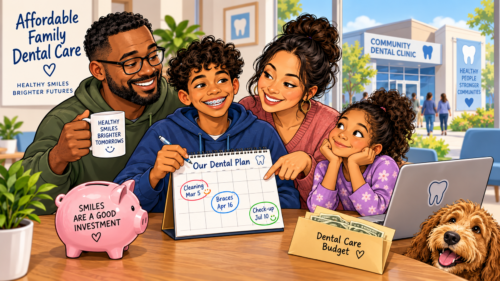
Many families skip visits to save money and end up paying far more later. According to the Centers for Disease Control and Prevention, more people are unable to afford dental care than any other type of health care, and roughly 29% of Americans have no dental insurance at all. That gap is a big reason so many small issues turn into expensive ones. Treat checkups as non-negotiable, and budget for them the way you would for car maintenance.
Explore Alternatives to Traditional Insurance
If your employer doesn’t offer dental coverage, or the premiums for a family plan make your eyes water, you’re not out of options. Many families find that dental savings plans fit their budget better than insurance, especially if they mainly need cleanings, checkups, and the occasional filling. These plans work like a membership: you pay an annual fee and get discounted rates at participating dentists, with no waiting periods, annual maximums, or claim forms.
DentalPlans.com, for example, lets you compare plans in your area and check whether your current dentist is in the network before you commit. For a family of four that mostly needs preventive care, the savings on routine visits alone can cover the membership cost several times over. That said, every family is different, so it’s worth comparing a savings plan against insurance based on the care you actually expect to need.
Ask Your Dentist About Costs Before Treatment
Dentists are used to talking about money, and most would rather have an honest conversation than watch a patient disappear because they were afraid of the bill. Before agreeing to treatment, ask:
- What is the total cost, and what will I pay out of pocket?
- Are there less expensive alternatives that would still work?
- Can this be spread over several visits?
- Do you offer in-house payment plans or a membership program?
You’d be surprised how often there’s a more affordable path, whether that’s a composite filling instead of a crown or simply phasing work over a few months.
Look Into Dental Schools and Community Clinics
Dental schools offer cleanings, fillings, and even more complex work at a fraction of typical prices. The care is provided by students under the close supervision of licensed faculty, so quality is high, though appointments tend to take longer. Community health centers and nonprofit clinics also offer sliding-scale fees based on income, and many have programs specifically for children.
These options are especially useful for big-ticket items like orthodontics or oral surgery, where the savings can be substantial.
Use Tax-Advantaged Accounts
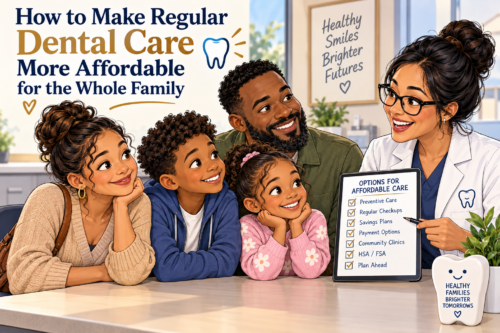
If your workplace offers a Flexible Spending Account (FSA) or you have a Health Savings Account (HSA), dental expenses usually qualify. Setting aside pre-tax money for cleanings, braces, or fillings, effectively give you a discount equal to your tax rate. It’s one of the simplest ways to stretch your dental budget, and it’s easy to overlook during open enrollment.
Time Big Procedures Wisely
If someone in the family needs major work, timing can make a real difference. If you have insurance, scheduling procedures across two calendar years can let you use two annual maximums instead of one. If you’re using an FSA, plan treatments before the funds expire. And if a dentist recommends non-urgent cosmetic work, it’s okay to wait until your budget is ready.
Conclusion
Keeping a whole family’s teeth healthy doesn’t require a bottomless budget, but it does require a bit of intention. Prevention is the foundation, regular checkups keep small problems small, and knowing your options, whether that’s a savings plan, a dental school, a payment arrangement, or a pre-tax account, means you’re never stuck choosing between your kids’ health and your bank balance.
Put a few of these strategies together, and dental care stops being a source of stress and becomes just another part of taking good care of the people you love.
Leave a Reply