Acne scars and uneven skin tone have a way of overstaying their welcome. The breakouts fade, the stress of the moment passes, but the marks they leave behind can linger for months or even years. For many people across New York, and especially in Nassau County, these lasting reminders quietly affect confidence long after the actual acne has cleared. Thankfully, chemical peels have become one of the most reliable, approachable treatments for addressing these concerns, and they are a lot gentler than most people assume.
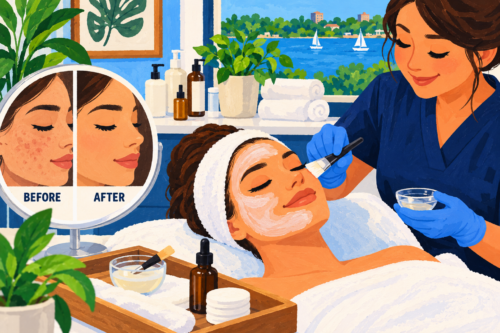
Here is how chemical peels actually work and why so many people are turning to them as a steady solution for scars, discoloration, and overall skin clarity.
Understanding What Chemical Peels Really Do
A chemical peel is a controlled exfoliation treatment designed to remove the damaged outer layers of the skin, revealing fresher, smoother, more even-toned skin underneath. It sounds intense, but modern peels come in a wide range of strengths, allowing providers to match the treatment to each person’s skin type, concern, and lifestyle.
Peels gently encourage the skin to renew itself more efficiently than it naturally would, which is why they are especially effective for stubborn skin issues like acne scarring and uneven tone.
Why Chemical Peels Work So Well for Acne Scars
Acne scars form when inflammation damages the deeper layers of the skin. The result is often uneven texture, discoloration, or shallow indentations that daily skincare cannot fully smooth out. Chemical peels help by stimulating the production of fresh skin cells and encouraging healthy collagen formation underneath the surface.
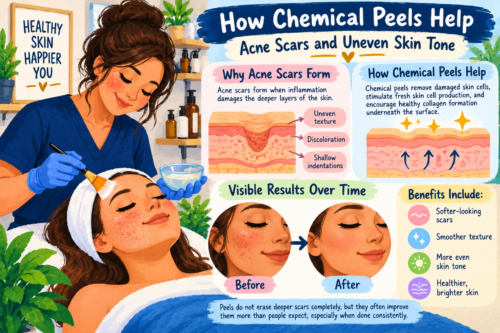
Over a series of treatments, this leads to visibly softer scars, smoother texture, and a more balanced overall skin tone. Peels do not erase deeper scars completely, but they often improve them more than people expect, especially when done consistently.
How Peels Address Uneven Skin Tone and Pigmentation
Uneven skin tone can come from many sources. Sun exposure, post-inflammatory pigmentation from past breakouts, hormonal changes, and natural aging all contribute to dark spots, patchy coloring, or dullness. Chemical peels help even things out by targeting the pigmented upper layers of the skin and allowing fresher, more uniform skin to come through.
The result is a brighter, more even complexion that feels healthier and makes makeup glide on more smoothly. Many people say their skin finally looks like it did before years of sun and stress started changing its tone.
The Types of Chemical Peels Available Today
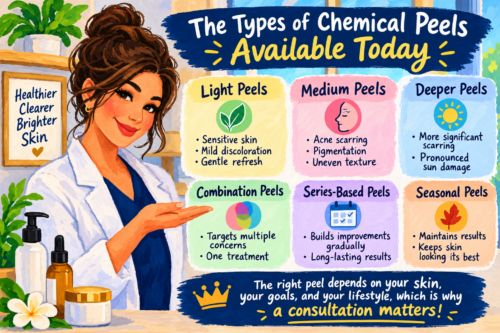
One of the great things about modern peels is how customizable they are. Depending on the concern, providers can recommend:
- Light peels for sensitive skin, mild discoloration, and gentle refresh
- Medium peels for acne scarring, pigmentation, and uneven texture
- Deeper peels for more significant scarring or pronounced sun damage
- Combination peels that target multiple concerns in one treatment
- Series-based peels that build improvements gradually over time
- Seasonal peels designed to maintain results between treatments
The right peel depends on the skin, the goal, and the lifestyle of the patient, which is why consultation matters so much.
Finding the Right Place for a Chemical Peel
Because peels vary so widely in strength and purpose, choosing the right provider is one of the most important parts of the process. A skilled provider assesses your skin thoroughly, understands your sensitivities, and recommends a plan that supports both your immediate goals and your long-term skin health.
Many people exploring this treatment have found great success with chemical peels in Nassau County at Nimbus Medical Spa, where personalized skin assessments and carefully selected peel formulas help patients see steady, visible improvement over time.
That tailored approach is exactly what sets a great peel experience apart. Instead of relying on a one-size-fits-all formula, patients get a plan designed around their specific concerns and skin type.
What Recovery Actually Looks Like
Recovery depends on the strength of the peel. Light peels often involve little more than a few days of mild flaking and sensitivity. Medium peels may lead to visible peeling for about a week. Deeper peels require more downtime but also deliver more dramatic results.
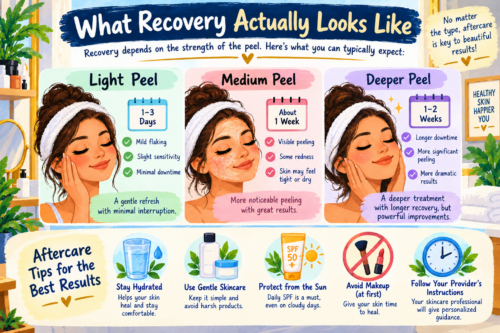
Regardless of the type, aftercare is one of the most important parts of the process. Hydration, gentle skincare, and strict sun protection help the skin heal beautifully and lock in the results.
Why Consistency Delivers the Best Results
Chemical peels are not a one-time miracle. They are a progressive treatment that works best as part of a thoughtful routine. Most providers recommend a series of peels spaced several weeks apart, followed by maintenance treatments throughout the year.
This consistency allows the skin to improve layer by layer, with gradual changes that look natural rather than sudden. Patients often say the biggest difference is not just how their skin looks, but how healthy and resilient it feels.
The Confidence Boost People Rarely Expect
The emotional benefits of clearer, more even skin are often what surprise patients the most. Less self-consciousness in natural light. More confidence without makeup. A face that finally feels like your own again. These small shifts tend to show up quietly, but they make a meaningful difference in how people move through their day.
Chemical peels have become one of the most dependable, approachable ways to improve acne scarring, discoloration, and uneven skin tone. With the right plan and the right provider, they offer steady, natural-looking results that help skin feel healthier from the inside out. If acne marks or uneven tone have been quietly weighing on you, a thoughtful consultation can help you understand which peel is right for your skin and your goals. Clearer, brighter, more confident skin is often more within reach than people realize.
Leave a Reply