The name sounds alarming, and a quick search of the term can send an already worried cat owner into a spiral of worst case assumptions. Eosinophilic granuloma complex is considerably less frightening than its clinical name suggests, though it genuinely deserves veterinary attention rather than a wait and see approach at home.
Understanding what this condition actually involves helps owners respond appropriately rather than either panicking unnecessarily or dismissing something that needs real care. Here is a detailed, section by section look at what every cat owner should know.
1. It Is Actually an Umbrella Term, Not a Single Condition
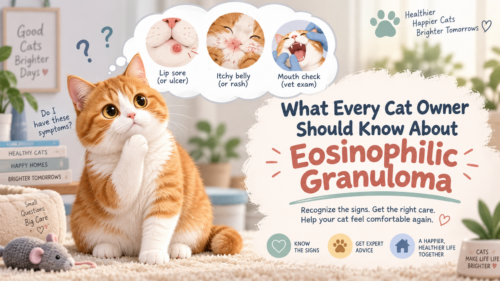
Eosinophilic granuloma complex covers three related skin presentations, indolent ulcers usually found on the lip, eosinophilic plaques often appearing on the belly or thighs, and eosinophilic granulomas themselves, which can appear in various locations including inside the mouth. Each presents somewhat differently, but all three share a common underlying mechanism tied to the immune system’s allergic or inflammatory response.
Understanding this umbrella structure helps owners recognize that different looking lesions on their cat may actually be part of the same broader condition, rather than assuming each presentation is a completely separate, unrelated problem requiring its own diagnosis.
2. It Usually Reflects an Allergic Response, Not a Deeper Illness
In most cases, this condition stems from an allergic response, most commonly to fleas, specific food ingredients, or environmental allergens, rather than signaling a serious systemic illness. That said, ruling out other causes remains an important part of a proper veterinary workup, since skin lesions occasionally point toward something else entirely that requires a different treatment approach.
This distinction matters for owner peace of mind, since understanding the typical allergic basis of the condition helps replace some of the alarm that the clinical terminology tends to create at first glance.
3. Diagnosis Usually Requires More Than a Visual Check
While the lesions associated with this condition have recognizable patterns, several other feline skin conditions can look quite similar at a casual glance. Properly confirming eosinophilic granuloma in cats typically requires a veterinary exam and sometimes a biopsy, since treatment decisions depend on ruling out infections, other allergic conditions, and in rarer cases, more serious underlying issues that a purely visual assessment would otherwise miss entirely.
MedcoVet has published detailed clinical information specifically to help owners understand what they are actually looking at, without either panicking unnecessarily or dismissing a lesion that genuinely warrants professional evaluation.
4. Treatment Often Involves Identifying the Underlying Trigger
Because the underlying cause is usually allergic in nature, managing this condition effectively often means identifying and reducing exposure to the specific trigger, alongside medication to calm the current flare up. A cat with an unaddressed flea allergy, for example, may see a lesion clear up with treatment only to have it return months later if flea exposure is not also brought under control.
This is why a thorough veterinary workup matters beyond simply treating the visible lesion. Identifying the actual trigger is what prevents the frustrating, recurring cycle that many owners describe when the underlying cause goes unaddressed.
5. It Is More Common Than Most Owners Realize
This condition is actually one of the more frequently diagnosed feline skin presentations in general veterinary practice, not a rare or unusual finding limited to a small subset of cats. Most experienced veterinarians recognize the pattern readily, which is part of why a relatively quick appointment is often enough to confirm what is going on and start an appropriate treatment plan.
Knowing that this condition is genuinely common helps owners approach the diagnosis with less anxiety, understanding that their veterinarian has almost certainly encountered and successfully managed similar cases many times before.
6. The Research Confirms How Frequently This Occurs
According to a clinical review published in the Journal of Feline Medicine and Surgery, eosinophilic granuloma complex represents one of the most frequently encountered dermatologic presentations in cats seen by general veterinary practitioners, reinforcing just how routine this diagnosis actually is within everyday clinical practice.
This research supports what many veterinarians already know from direct experience: while the name sounds intimidating, the condition itself is well understood, commonly encountered, and generally quite manageable once properly diagnosed.
Final Thoughts
Eosinophilic granuloma complex carries a name that sounds far more alarming than the condition typically warrants. Understanding that it usually reflects an allergic response, requires proper veterinary diagnosis rather than guesswork, and often resolves well once the underlying trigger is identified helps owners approach it with appropriate concern rather than unnecessary panic.
If you notice a raised, red, or ulcerated area on your cat’s lip, belly, or elsewhere, scheduling a veterinary visit sooner rather than later is the right move. Most cases respond well to treatment once properly diagnosed, and getting professional guidance removes the guesswork of trying to manage the condition without a clear understanding of what is actually happening.
Leave a Reply