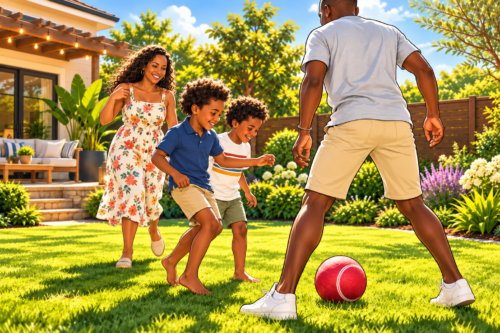
A beautiful backyard is nice to look at, but the real test is whether anyone actually wants to spend time there. For busy families, the best outdoor spaces aren’t necessarily the biggest or most elaborate; they’re the ones that make it easy to step outside for dinner, let the kids burn off some energy, catch up at the end of the day, or invite friends over without turning the whole thing into a production.
Building a backyard your family will actually use starts with a simple question: what would make your family choose the backyard over the couch?
Plan Around Real Life
It is tempting to begin a backyard project by scrolling through photos of beautiful patios, gardens, and pools. Inspiration is helpful, but your family’s routines should come first.
Think about an ordinary Tuesday rather than a summer party. Do the kids need a place to play where an adult can easily keep an eye on them? Would you eat outside more often if the table were closer to the kitchen? Does everyone retreat indoors because the patio gets too hot in the afternoon? Planning for those everyday moments can help you avoid creating an impressive outdoor space that only gets used when company comes over.
Give People a Reason To Sit Down
Comfort can determine whether the family spends 10 minutes outside or settles in for the evening. Create at least one comfortable gathering area with enough seating that nobody has to drag a dining chair outside. Depending on the size of the yard, that could mean a patio table, cushioned outdoor chairs, a porch swing, or a sectional where everyone can spread out.
Shade deserves just as much thought. Covered patios, umbrellas, pergolas, and mature trees can make outdoor spaces far more comfortable during hot afternoons. If you’re looking at the yard as a whole, setting up outdoor living for more family time at home allows seating, dining, activities, and other outdoor areas to work together naturally.
Make Meals Outside Easy
You don’t need a magazine-worthy outdoor kitchen to enjoy dinner outside. Sometimes, convenience matters more. Place your dining area reasonably close to the house, especially if you’ll be carrying plates, drinks, and forgotten ketchup bottles back and forth. A weather-resistant container or cabinet can hold frequently used outdoor dishes, napkins, serving pieces, and other basics.
And remember that outdoor dining doesn’t have to mean grilling an elaborate dinner every time. Takeout pizza, Saturday breakfast, afternoon snacks, and ice cream after dinner all count. The easier it feels, the more often you’ll do it.
Design a Pool Around How the Family Will Use It
For families considering a backyard swimming pool, appearance is only one part of the decision. The layout and surrounding spaces can influence how naturally the pool becomes part of family life.
For example, shallow areas can provide a place to lounge or play, while nearby seating gives adults somewhere comfortable to supervise younger swimmers. Clear walking areas, thoughtfully positioned lighting, and convenient storage for towels and pool items can make everyday use simpler.
It can also help to think of the pool as one part of the outdoor environment rather than an isolated feature. Current custom pool design trends include layouts that connect pools with patios, shaded seating, outdoor dining areas, lighting, and other features. That kind of integrated planning can help the whole yard feel more cohesive and useful. Whatever features you choose, water safety and age-appropriate supervision should remain central to how your family uses the space.
Create Something for Different Ages
A backyard doesn’t have to entertain everyone in exactly the same way. In fact, it usually works better when it doesn’t. Younger children might want space for toys or imaginative play while older kids prefer a lawn game or somewhere to sit with friends. Adults may simply want a comfortable chair and a place to set a drink.
Try creating areas close enough that everyone can still be together. A table can handle crafts in the afternoon and a family meal at night. A small garden can become a shared project, while an open lawn can accommodate everything from bubbles to badminton. The goal is connection without requiring the whole family to participate in the same activity.
Don’t Forget What Happens After Sunset
For many families, evenings are when everyone finally arrives home. Good lighting lets the backyard remain useful instead of disappearing when the sun goes down.
Start with practical lighting around doors, steps, pathways, pool areas, and other places where visibility matters. Then consider softer lighting around dining and seating spaces to create a comfortable atmosphere.
You don’t need to light up every corner. A few thoughtfully illuminated areas can make the whole yard feel welcoming while clearly defining where people gather and walk.
Make Cleanup Simple
Nothing discourages spontaneous outdoor time quite like knowing there will be a 30-minute cleanup afterward. Give outdoor belongings obvious homes. A deck box can hold balls, toys, cushions, and games. Hooks can handle towels. A small cabinet can keep dining supplies organized. Even a basket near the back door can prevent everyone from hunting for sunscreen or outdoor essentials.
The same thinking applies to landscaping and furniture. Choose materials and plants based partly on the maintenance you’re realistically willing to do.
Build a Space for Ordinary Days
It’s easy to picture the backyard during birthday parties, graduation celebrations, and summer barbecues. But those aren’t the moments that will determine whether your investment was worthwhile.
Think about homework at the patio table. Popsicles after school. A Saturday morning cup of coffee while the kids play. Dinner outside because the weather is too nice to waste. A conversation that stretches a little longer because nobody feels the need to go inside yet.
Building a backyard your family will actually use doesn’t mean you need to include every possible amenity. It simply means removing the little obstacles that keep your family indoors. When the space is comfortable, flexible, convenient, and designed around the people who live there, using it becomes the easy choice.
Leave a Reply