Stand in the middle of a fully lived-in family home and really look at it. The closets stuffed with coats nobody wears, the garage that swallowed a decade of bikes and holiday decorations, the kitchen drawer that defies all explanation. Now imagine every bit of it in boxes, on a truck, and back out again in a new house, often inside a window of just a few weeks. That quiet moment of dread is where most family moves begin.
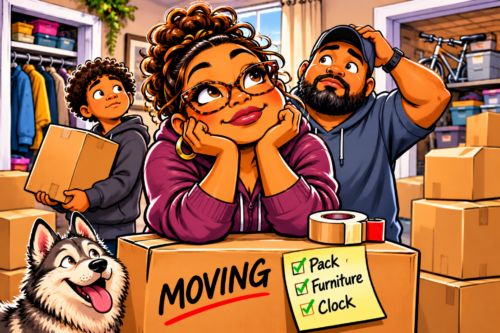
A full-home move is not one big task; it is a thousand small ones stacked on top of jobs, school runs, and ordinary life that refuses to pause. For families relocating around Brookfield, the overwhelm usually comes down to the same three pressures: the packing, the furniture, and the clock. Tackle them deliberately and the whole thing becomes manageable. Here is how.
Why a Full-Home Move Feels So Overwhelming
The stress of moving a whole household is not a sign you are disorganized. It is a reasonable response to a genuinely enormous job, one that touches every room and every member of the family at once. Years of accumulated belongings, sentimental attachments, and the sheer logistics of relocating a life all land on you in the same compressed stretch of time.
It is worth remembering that most of these moves are local, which paradoxically makes the timeline tighter. The U.S. Census Bureau reports that nearly two-thirds of people who move stay within the same county. A short-distance family move sounds easy, but it often means a fast closing, a hard handover date, and no spare days to drift, which is exactly why a clear plan matters more than extra miles ever would.
Packing: Start Far Sooner Than You Think
Packing is the part everyone underestimates, always. A family home holds vastly more than it appears to, and the discovery usually arrives around box forty when morale is already fraying. The single best defense is time, so begin weeks out rather than days, starting with the things you rarely touch and working toward the daily essentials.

A little system turns chaos into something you can actually finish. You do not need anything fancy, just a consistent method applied room by room:
- Declutter before you pack, so you never pay to move what you will only throw out later.
- Pack one room at a time to keep a visible sense of progress.
- Label every box by room and contents, not just a vague scribble.
- Set aside an essentials box for the first night in the new home.
- Keep valuables, documents, and medications with you, never on the truck.
The goal is to reach moving day with the hard thinking already done. When each box knows where it is going before it is even sealed, the unpacking on the other end stops being a second overwhelming move and becomes something close to orderly.
Furniture: Decide, Disassemble, and Protect
Furniture is where a family move gets physically heavy, in every sense. Before anything gets lifted, make the honest decisions: what is coming, what is being sold or donated, and what has quietly reached the end of its life. Hauling a worn-out dresser to a new home, you will replace it in six months. It is effort and money spent on nothing.
What stays needs real handling, and this is the point where many families decide not to go it alone. Disassembling beds, protecting surfaces, and safely moving heavy, awkward pieces is exactly what a professional moving company in Brookfield, CT is built for, and a team like Shepard’s Moving & Storage brings the equipment and the muscle to do it without wrecked backs or scratched floors. Letting specialists carry the heaviest load frees your family to manage everything else that only you can.
Tight Timelines: Build a Plan and Defend It
The clock is the pressure that amplifies all the others, so it deserves a plan of its own. Work backward from moving day and give each stage a deadline: utilities transferred, school records requested, address changes filed, packing finished by a date that is comfortably before the truck arrives rather than the morning of.


Then build in buffer, because something always slips. A move with no slack turns a single hiccup into a crisis, while a move with a day or two of breathing room absorbs the inevitable surprises without derailing. Write the plan down, share it with the whole family, and treat the deadlines as real. A timeline you actually protect is what keeps a tight move from tipping into a frantic one.
The Bottom Line
Moving a full family home is genuinely stressful, but almost all of that stress traces back to three fixable pressures. Give packing far more lead time than feels necessary, make clear-eyed decisions about your furniture and get help with the heavy work, and build a realistic timeline with room to breathe. Handle those three well and the mountain shrinks to a series of manageable steps.
No move with kids, careers, and a decade of belongings is ever perfectly smooth, and it does not need to be. The families who come through it calmly are not the ones who had less to move; they are the ones who planned early, asked for help where it counted, and refused to leave the whole thing to the last frantic week.
Leave a Reply