A brown stain spreads across the bedroom ceiling the morning after a spring storm in Northwest Arkansas, and suddenly the question you have been putting off is on the table. Do you patch the leak and move on, or is it time for a new roof? Both choices cost money, and the wrong one can cost more later. The honest answer depends on your roof’s age, its condition, and how much of it is affected.
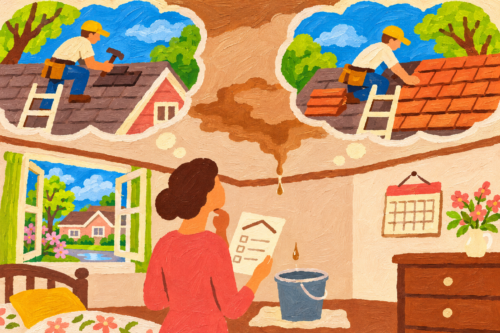
This guide breaks the decision into simple steps, so you can look at your roof with a clearer eye, ask better questions, and choose with confidence instead of fear, whether your home is brand new or decades old.
Look for the Warning Signs
Start by checking your roof from the ground and from inside the house. You are looking for signs of wear, not trying to diagnose everything yourself.
Common signs include:
- Curling, cracked, or missing shingles.
- Shingle granules collected in gutters.
- Dark stains or damp spots on ceilings and walls.
- Daylight showing through the attic boards.
- Sagging areas or soft spots in the roofline.
Take photos as you go. They help you track changes and are useful when you talk to a roofer or insurance company. Stay off the roof itself unless you are trained, because falls are a real danger.
Check How Much of the Roof Is Affected
Repair usually makes sense when the problem is limited, such as a few damaged shingles or a single leak around a vent. Replacement becomes more likely when problems are spread across the roof.
Ask yourself:
- Is the damage on one slope or across several?
- Have you needed repairs before, and how often?
- Is the roof decking underneath wet, soft, or rotted?
Frequent patching is a sign the roof is wearing out. If you repair the same area twice in a year, the problem may be bigger than it looks.
Consider Age and Local Weather
Age matters, because roofing materials wear down over time. Different materials last for different lengths of time, so check what is on your home and when it was installed. Local weather matters too. The Insurance Institute for Business & Home Safety, a research organization, says approximately 3,000 hailstorms occur each year in the United States, and that hail can shred roof coverings and lead to water damage inside the home.
That figure is a national count from a nonprofit research group, not a government statistic, and it does not tell you how likely hail is in your own neighborhood. It is a reminder that storms can age a roof faster than the calendar suggests. After a big storm, have your roof checked even if nothing looks wrong from the ground.
Get a Professional Inspection
A trained inspector can identify problems you may not notice, including damage beneath the surface. An inspection also gives you reliable information to base your decision on.
When choosing a roofing company in Springdale AR, ask what the inspection covers, whether you will receive a written report, and how the available repair or replacement options are explained. A reliable contractor should show you the problem rather than simply describe it.
Before approving any work, ask about the project timeline, material choices, insurance claim assistance, and expected completion date. Get all estimates and agreed details in writing. If the recommendations feel rushed or the quote seems unusually high, consider getting a second opinion.
Compare Costs Over Time
Repair is cheaper today, but it is not always cheaper in the long run. The real comparison is the total cost over the next several years.
Think through:
- The cost of the repair and how long it is likely to last.
- The risk of new leaks nearby, since old roofing tends to fail in more places.
- The cost of interior damage if water gets in.
- Whether you plan to sell soon, since a newer roof can help buyers feel confident.
If a repair buys you only a year or two before you need a full replacement, putting the money toward a new roof can make more sense.
Check Insurance and Timing
If damage came from a storm, talk to your insurance company early. Ask what your policy covers, what documentation they need, and what deadlines apply. Take photos before any temporary protection, such as a tarp, goes on, and keep receipts for any emergency work.
Timing matters too. Delaying a needed repair can let water spread into the attic, insulation, and walls. If you do need a replacement, planning ahead lets you compare estimates calmly instead of choosing in a hurry.
Use a Simple Decision Checklist
When in doubt, run through these questions:
- Is the damage small and limited to one area?
- Is the roof relatively young, and is the decking solid?
- Has the roof needed repeated repairs?
- Does a professional inspection support repair or replacement?
Mostly “yes” to the first two usually points to repair. Mostly “yes” to the last two points toward replacement.
Conclusion
Deciding whether to repair or replace an aging roof comes down to evidence, not guesswork. Look for warning signs, check how widespread the damage is, and think about the roof’s age and the weather it has faced. Get a professional inspection, compare costs over several years, and talk to your insurance company early if a storm was involved. Use a simple checklist to keep the decision clear. A small, isolated problem on a younger roof often calls for repair, while repeated or widespread damage usually points to replacement. Either way, acting early protects your home and your budget.
Leave a Reply