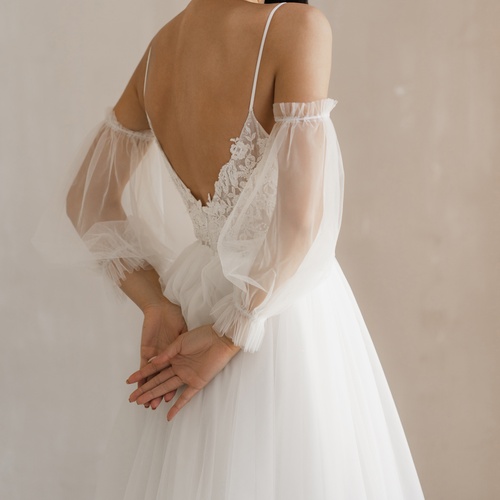
Choosing a wedding dress is a meaningful decision, and it should still feel practical and true to everyday comfort. Your gown reflects personal style, daily comfort, and the kind of experience someone wants to have on a meaningful day. Taking time to ask yourself several key questions before wedding dress shopping eases the process.
How do you envision the Big Day?
The setting, season, and overall atmosphere all influence what will feel appropriate and comfortable. An outdoor ceremony in a warm climate calls for lighter fabrics like chiffon or organza. In contrast, fall or winter weddings often support heavier materials such as satin or layered tulle, which provide warmth and hold shape more easily.
Likewise, a backyard or daytime wedding typically suits simpler silhouettes that allow for movement and ease, while a formal evening event may accommodate more structure, longer trains, or fuller skirts. Considering details like terrain, temperature, and how long the dress will be worn helps narrow choices in a practical way. When the dress reflects the actual conditions of the day, it tends to feel more comfortable and visually consistent.
What Should the Dress Feel Like?
Comfort influences more than expected throughout the day. You should be able to move, sit, and pose in your dress for several hours without issue. If the gown has a lot of boning or feels too fitted, you may feel more focused on getting out of it than living in the moment on your big day.
Your wedding dress should feel fitted in the bodice, but not to the point that it’s hard to take deep breaths. Talk to the consultant if you’re not sure whether the gown fits properly.
Which Silhouettes Tend To Work Best?
Different dress shapes create very different experiences. Some offer structure and volume, while others allow for more movement and simplicity. Rather than focusing only on trends, it helps to consider what has consistently felt flattering and comfortable over time.
Understanding basic silhouette differences can bring clarity to the decision. For instance, if you want a gown with a full skirt, decide whether you prefer an A-line or a ball gown as you narrow down your options. While both bring a lot of poof, an A-line silhouette tends to flow more gradually from the waist, and a ball gown offers a more dramatic shape with added fullness and structure.
What Features Should Be Highlighted?
Every dress draws attention somewhere, whether through neckline, waistline, fabric, or overall shape. Identifying what feels most natural to highlight can guide the selection process without overcomplicating it.
The features you highlight also depend on the vibe you want for the big day. If you plan a sophisticated wedding, you may prefer more conservative gowns. On the other hand, if you want a fun and free vibe, you may gravitate towards mermaid styles that show off your curves.
Is the Choice Grounded in Personal Preference?
The most important question you can ask yourself when dress shopping is whether you love the gown. Outside opinions are often part of the process, but the final decision benefits from clarity and confidence. A dress that feels right tends to stand out without much explanation. It aligns with both comfort and personal style in a way that feels steady rather than uncertain.
Leave a Reply