A belt is one of those items that gets picked almost as an afterthought, grabbed off a hook on the way out the door because it happens to match whatever pants you’re wearing. But a belt sits right at eye level when someone’s talking to you, and it says more about your actual personality than most of what’s hanging in your closet.
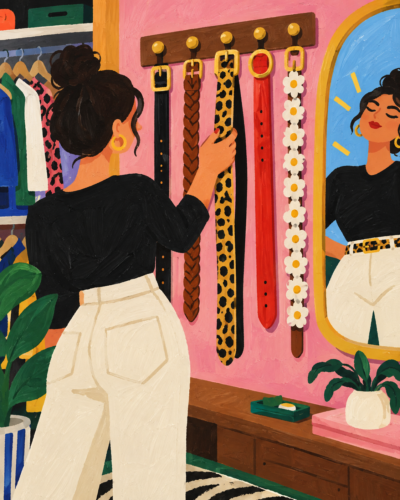
Choosing one that actually reflects who you are, rather than whatever was within arm’s reach, is a small shift that makes getting dressed feel a little more intentional.
Start With What You Actually Wear Most
Before thinking about design or color, it helps to be honest about your day-to-day wardrobe. Someone who lives in jeans needs a different belt than someone who spends most weekdays in khakis or dress pants.
A belt that looks sharp with tailored trousers can look out of place with casual denim, and vice versa, so the starting point isn’t the belt itself, it’s an honest look at what’s already in your closet.
Why Durability Matters More Than It Seems
This isn’t just a personal preference, either. According to Mordor Intelligence’s leather goods market analysis, men account for 52.05 percent of the global leather goods market, a share the firm attributes specifically to a preference for durability and functionality, which tends to stretch out how long a product gets used before being replaced.
The same report notes that leather accessories like belts and wallets remain in steady demand regardless of how workplace dress codes evolve. In other words, a lot of men aren’t buying belts often, they’re buying one that’s meant to last, which makes the choice worth more thought than it usually gets.
Let Your Interests Do Some of the Talking
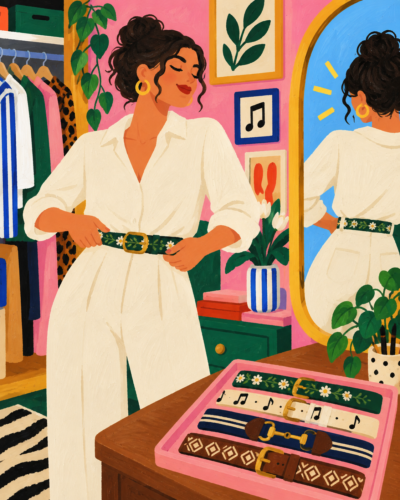
A belt doesn’t have to be purely functional. Subtle details, whether it’s a pattern tied to a hobby, a sport, or something you simply find visually interesting, can turn a basic accessory into something that feels a little more like you.
This doesn’t mean going loud or novelty, it just means picking something with enough character that it wouldn’t look the same on anyone else’s waist.
Pay Attention to What the Belt Is Actually Made Of
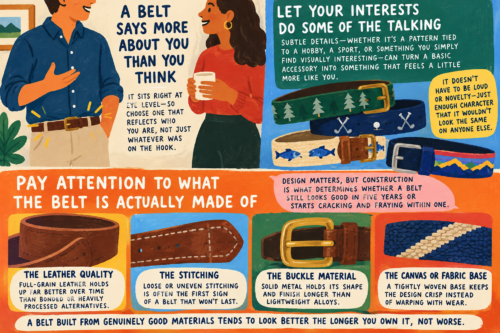
Design matters, but construction is what determines whether a belt still looks good in five years or starts cracking and fraying within one. A few things worth checking before buying:
- The leather quality, since full-grain leather holds up far better over time than bonded or heavily processed alternatives
- How the stitching is finished, as loose or uneven stitching is often the first sign of a belt that won’t last
- The buckle material, with solid metal holding its shape and finish longer than lightweight alloys
- The canvas or fabric base, if the belt has a woven or embroidered front, since a tightly woven base keeps the design crisp instead of warping with wear
A belt built from genuinely good materials tends to look better the longer you own it, not worse.
Where Handcrafted Details Come In
For guys whose style leans toward something with a bit more character, hand-stitched needlepoint belts offer a middle ground between a plain leather strap and something flashy. The design sits on a narrow canvas panel, which means it can reflect a specific interest, a hobby, a sport, a place, without turning the whole belt into a statement piece.
A five-year warranty, the kind Good Threads puts behind its belts, is usually a decent sign that a brand trusts its own stitching to actually hold up over time, not just look good on day one.
Matching the Belt to the Occasion
The same belt doesn’t need to work for every situation, and trying to make one do everything usually means it does nothing particularly well. A few general guidelines:
- Save slimmer, more formal leather belts for dress pants and tailored occasions
- Reserve belts with more personality or texture for casual weekends and everyday wear
- Keep a classic, no-frills option on hand for situations where you’re not sure what the dress code actually calls for
- Consider having at least one in both black and brown, since most wardrobes split fairly evenly between the two
Having a small, well-chosen rotation beats owning one belt that gets stretched to cover every outfit you own.
Conclusion
Picking a belt that actually complements your style comes down to being honest about what you wear most, paying attention to how it’s actually made, and giving yourself permission to choose something with a bit of personality instead of defaulting to whatever’s closest to the door. Given how much weight durability carries in how men actually shop for leather goods, it’s worth treating the purchase as a long-term decision rather than a quick grab on the way out.
If your current belt rotation feels more like an afterthought than a reflection of how you actually dress, that’s usually a sign it’s time to be a little more deliberate about what you reach for next.
Leave a Reply