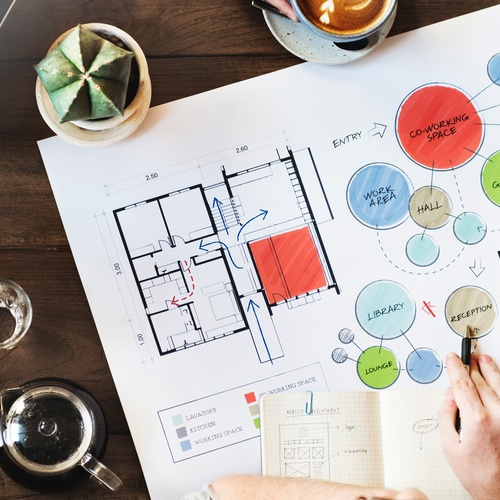
Moving into a new home is equal parts exciting and “okay, where is all the everyday stuff going to land?” A floor plan can look perfect online and still feel awkward once you’re living in it—especially when you’re juggling kids, a relationship, and a business that doesn’t pause just because dinner needs to happen. If you need to create a floor plan layout for your new home, check out our tips below!
Tip 1: Begin with your daily rhythm, not the square footage
Before you get into measurements and room counts, start with your routine. Think about a normal weekday from the moment you walk in the door. Where do shoes, bags, and mail naturally end up? Who wakes up first, and what needs to be close by so mornings don’t feel chaotic?
You want to have plenty of functional space, but also a layout that fits you and your household’s personality. For example, creating a reading nook is an excellent idea for parents and children who love to read and won’t take up much of your floor space.
Tip 2: Design for flow in the areas you use most
Another tip for creating a floor plan layout for your new home is to design for flow where you need it most. Flow is one of those things you notice the moment it’s wrong. Pay attention to the paths between the entry, kitchen, living space, bathrooms, bedrooms, and laundry. You want those routes to feel natural and open, without forcing people to cut directly through work zones like the cooking area or the spot where kids tend to do homework.
Tip 3: Decide on open versus defined spaces
One of the most important decisions to make in regard to your layout is whether you want an open floor plan or not. There are pros and cons to open floor plan homes, from more flexibility to less privacy. Assess whether more open space is a benefit to your family, or whether more privacy is ideal for your home.
Tip 4: Give support spaces the respect they deserve
Support spaces are the quiet heroes of a home. They don’t get the glory, but they keep life from spilling onto every surface. Think about where coats will go, whether there’s a spot to sort backpacks and lunch boxes, and how close your storage is to where you’ll actually use it. Pantry space, linen closets, a small drop zone near the entry, and laundry placement can be the difference between a home that feels put-together and one that constantly feels like it’s catching up.
Conclusion
A thoughtful floor plan isn’t about chasing the “right” trend—it’s about creating a home that supports your family’s habits and your future plans. When you begin with your routine, your home starts to feel easier to live in from day one. And honestly, that’s the real win: a space that holds your life well, so you can spend less time adjusting to your house and more time enjoying it.
Leave a Reply